
The Hidden Difference in Adviser Fees and Why It Matters for Your Retirement
- RetireAdvisers℠ of Pension Consultants, Inc.

- Dec 11, 2025
- 3 min read

When researching financial professionals or advisory services, you may come across two terms that sound similar but represent different approaches to how firms are compensated: fee-only and fee-based.
Understanding how an adviser is paid can help you better evaluate potential conflicts of interest, the structure of the relationship, and the level of transparency you can expect. While compensation models do not determine the quality or performance of advice, they do influence how advisers are permitted or incentivized to operate.
Knowing these distinctions can help people like you feel more confident in evaluating resources and guidance related to your retirement plan.
What Does “Fee-Only” Mean?
A fee-only adviser is compensated exclusively by the fees paid by the individuals or organizations they serve. These fees may be structured in a variety of ways, such as:
A flat or subscription fee
An hourly rate
A percentage of assets under management
A fixed project or planning fee
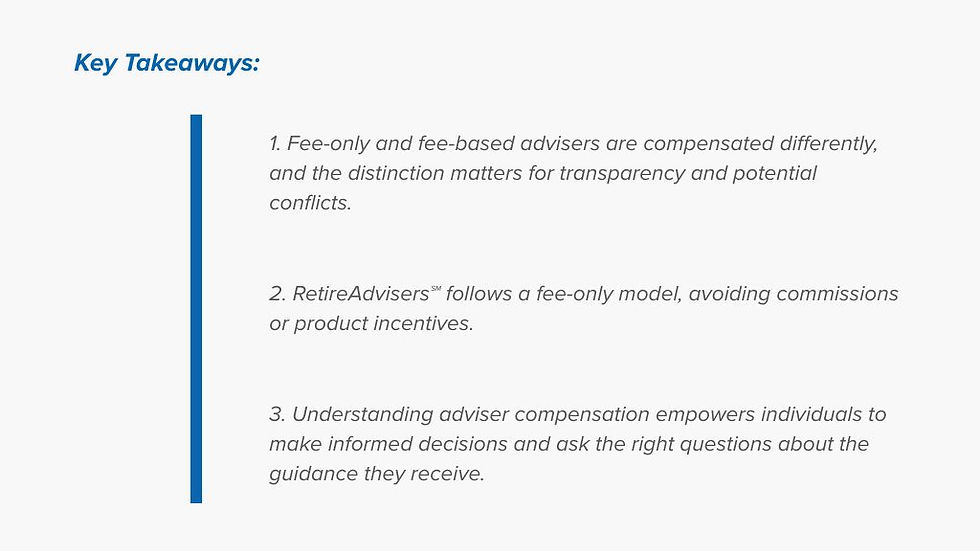
The key point: fee-only advisers do not receive commissions or revenue from product sales.
Because no product-based compensation exists, the fee-only model is often viewed as more straightforward. It can also reduce the possibility that compensation is tied to recommending certain financial products.
What Does “Fee-Based” Mean?
A fee-based adviser may charge advisory fees similar to those listed above, but may also receive compensation in the form of commissions or other incentives tied to product recommendations.
Examples may include compensation from:
Mutual fund share classes
Insurance products or annuities
Certain investment or platform providers
Fee-based advisers may serve in a dual role, sometimes acting as a fiduciary adviser and other times functioning as a broker or product representative, depending on the engagement and regulatory structure.
Because both fee and commission revenue may be involved, conflicts of interest exist when product recommendations result in compensation beyond advisory fees.
Why Does the Distinction Matter?
Compensation models do not guarantee outcomes, but they can shape:
How recommendations are regulated
Which products an adviser can or cannot recommend
Whether potential conflicts must be disclosed
How transparency is presented to the client
The increased focus on financial transparency—including efforts across the industry and regulatory shifts—has encouraged many investors to ask better questions about how advisory services are structured and compensated.
If you’re interested in how investment decisions should be aligned with your goals and risk profile, not compensation incentives, take a look at our article Building a Retirement Investment Portfolio: Aligning Goals, Tolerance, and Capacity.
Why RetireAdvisers℠ Uses a Fee-Only Model
RetireAdvisers℠ operates as a fee-only advisory service. This means we are compensated solely by the fees paid for our services, not through product sales or commissions.
This structure supports:
Clarity around costs
Alignment of interests between adviser and participant
Reduced potential for compensation-based product recommendations
A fee-only approach allows us to focus on education, guidance, and your best interest, without financial incentives tied to specific products.
Questions to Consider When Evaluating an Adviser
Whether you engage RetireAdvisers℠ or another financial professional, you may find it useful to ask:
How are you compensated?
Do you receive commissions or revenue from third-party products?
When do you act under a fiduciary standard?
How will I know when fees or incentives apply?
Transparency supports informed decisions, and understanding compensation helps set expectations before entering a financial relationship.
Making Sense of Adviser Fees
Fee-only and fee-based models each operate within regulatory frameworks and serve different purposes in the financial industry. The key is understanding how the structure affects your experience, the advisory relationship, and the recommendations you receive.
At RetireAdvisers℠, our fee-only approach reflects a commitment to transparency and participant-focused service within the retirement planning environment. If you’d like additional clarity around adviser fees or how compensation structures may impact the guidance you receive, our team is available to discuss these concepts with you. We can also review a hypothetical Income Needs Analysis to help illustrate how fees, savings habits, and expenses interact within your retirement plan.
The concepts expressed herein represent the views and opinions of Pension Consultants, Inc., and are not intended as legal, tax, or investment advice for any specific individual, account, or plan.


